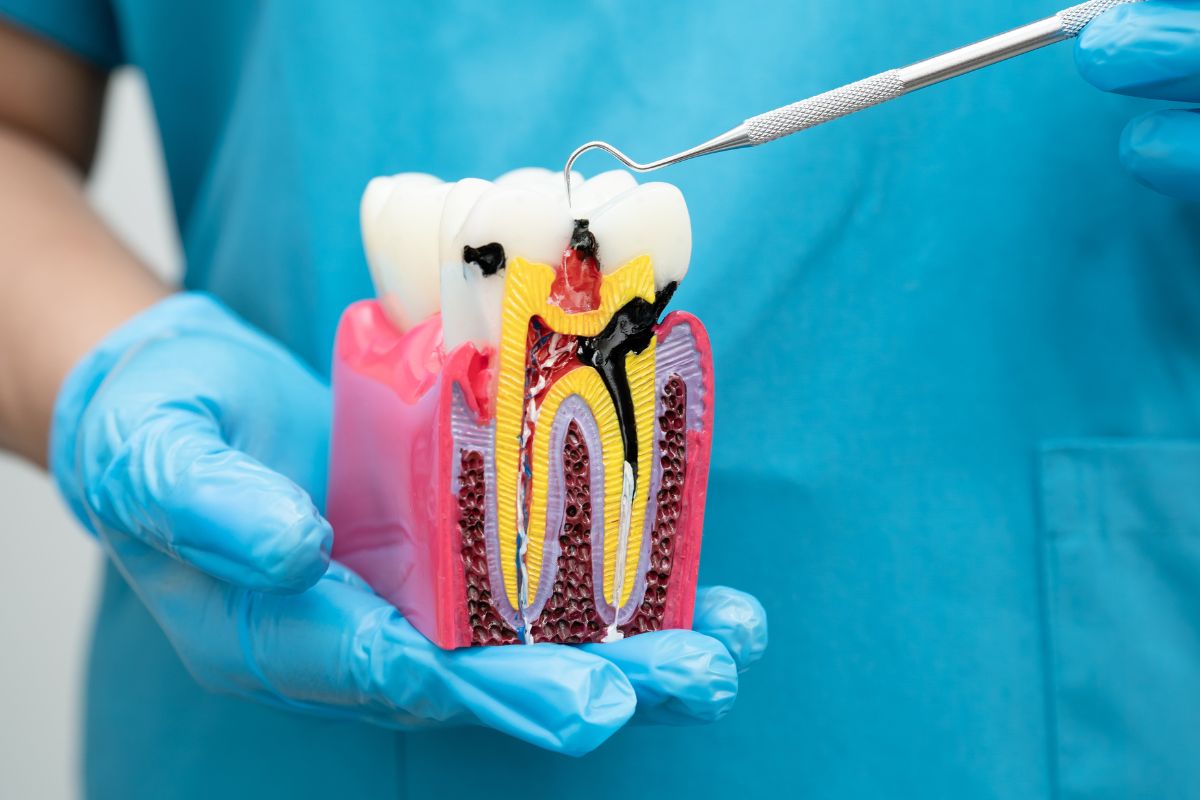

A root canal procedure can sound intimidating if you have never experienced one. However, modern dental care makes this treatment more straightforward than many people expect. The goal is simple: remove infected or damaged tissue inside a tooth, clean the inner space, and protect the natural tooth so you can continue using it.
At Affinity Dental, patients receive personalized restorative care designed around their comfort and long-term oral health. Dr. Kelly B. Wettstein and Dr. Payton Harker provide comprehensive dental services, including restorative treatments that can help preserve natural teeth.
If your dentist has recommended treatment for an infected or badly damaged tooth, understanding each stage can make the experience feel much less uncertain.
Why Would You Need a Root Canal Procedure?
Inside every tooth is a soft area called the pulp. It contains nerves, blood vessels, and connective tissue. A deep cavity, crack, injury, or repeated dental treatment can damage this inner tissue.
When the pulp becomes infected or severely inflamed, the tooth may develop symptoms such as:
- Persistent tooth pain
- Sensitivity to hot or cold
- Pain when biting or chewing
- Swelling near the affected tooth
- Tender gums
- A bad taste in the mouth
- A dental abscess
- Darkening of the tooth
Sometimes, however, an infected tooth causes little or no pain. That is why a dental examination matters when your dentist notices signs of infection or damage.
Affinity Dental explains that treatment removes infected tissue from inside the tooth, cleans and reshapes the canals, and fills the space to help preserve the natural tooth.
What Happens Before Treatment Begins?
Before the root canal procedure, your dentist first needs to understand exactly what is happening inside and around the tooth.
The dentist may:
- Ask about your symptoms and dental history.
- Examine the affected tooth.
- Check how the tooth responds to pressure or temperature.
- Take dental X-rays when necessary.
- Look for signs of infection or damage.
- Discuss the recommended treatment with you.
This step helps your dentist determine whether the tooth can be restored and whether this treatment offers a suitable way to preserve it.
Your Treatment Plan Is Based on Your Tooth
Not every tooth has the same shape or level of damage. Front teeth, premolars, and molars can have different numbers and shapes of canals. Therefore, treatment can vary from one patient to another.
Your dentist will explain what they find and answer your questions before treatment begins.
Step 1: The Dentist Numbs the Tooth
The first major step involves making you comfortable.
Your dentist uses local anesthesia to numb the area around the affected tooth. Once the area becomes numb, you should not feel sharp pain during treatment.
Affinity Dental states that this treatment is generally not painful because local anesthesia numbs the area. Patients may experience some soreness afterward, but the team can provide guidance for managing normal post-treatment discomfort.
If you feel nervous about dental treatment, tell your dentist before the procedure begins. Affinity Dental also offers sedation services for patients who experience dental anxiety or want additional help staying relaxed during treatment.
Step 2: The Dentist Protects the Tooth
After the area becomes numb, your dentist isolates the tooth from the rest of your mouth.
This helps keep the treatment area clean and dry. It also helps prevent saliva and bacteria from entering the tooth while the dentist works inside it.
Keeping the tooth isolated allows your dentist to work more precisely and maintain a controlled treatment environment.
Step 3: An Opening Is Made in the Tooth
Next, the dentist creates a small opening through the top of the tooth.
This opening gives the dentist access to the inner chamber and the damaged pulp tissue.
The dentist uses specialized dental instruments to reach the canals inside the tooth. Although this may sound complicated, you should mainly feel pressure rather than sharp pain because the tooth and surrounding area have already been numbed.
Step 4: Infected Pulp Is Removed
The dentist then carefully removes the damaged or infected pulp from inside the tooth.
This is an important part of the root canal procedure because the infected tissue can continue causing pain and inflammation if it remains inside the tooth.
The dentist cleans the inner chamber and canals to remove bacteria, damaged tissue, and other debris.
The purpose is not simply to stop tooth pain. The treatment aims to eliminate the source of infection while preserving as much healthy tooth structure as possible.
Why Removing the Infection Matters
Without appropriate treatment, an infection inside a tooth can become more serious.
It may contribute to:
- Increasing tooth pain
- Swelling around the tooth
- An abscess
- Damage to surrounding tissues
- Possible tooth loss
Affinity Dental notes that delaying treatment can allow an infection to worsen and may increase the risk of tooth loss or an abscess.
Step 5: The Canals Are Cleaned and Shaped
After removing the damaged pulp, the dentist cleans and shapes the narrow canals inside the tooth.
These canals can be very small and complex, so the dentist uses specialized instruments to carefully prepare them.
Cleaning removes remaining debris and helps reduce bacteria inside the tooth. Shaping creates enough space for the dentist to place the filling material securely.
This stage requires precision because the goal is to clean the internal space while preserving the structure that remains.
Step 6: The Cleaned Canals Are Filled
Once the dentist finishes cleaning and shaping the canals, the empty space needs protection.
The dentist fills the canals with a specialized material that helps seal the internal space.
Affinity Dental describes the treatment as removing decay or damaged tissue, reshaping the canal, and replacing the pulp with strengthening filler.
Sealing the canals helps prevent bacteria from entering the treated area again.
At this point, the main internal treatment is complete. However, the tooth still needs protection from everyday biting forces.
Step 7: The Tooth Receives a Restoration
After treatment, your dentist will determine how best to restore the tooth.
In many cases, a crown provides important protection. A treated tooth can become more vulnerable to fracture because the original internal tissue and some tooth structure have been removed.
Affinity Dental notes that a crown is recommended in most cases after this treatment because it can provide strength, protection, and normal function.
The exact restoration depends on factors such as:
- Which tooth received treatment
- How much natural structure remains
- The amount of damage
- The tooth’s location
- Your bite
- Your overall treatment plan
Your dentist will explain which restoration makes sense for your particular tooth.
Step 8: You Follow Aftercare Instructions
After treatment, your mouth may remain numb for several hours.
Because of this, avoid chewing until normal sensation returns. Otherwise, you could accidentally bite your cheek, tongue, or lip.
Your dentist may also recommend that you avoid chewing hard foods on the treated tooth until its final restoration is complete.
Affinity Dental recommends continuing to brush and floss carefully around the treated area while following any additional instructions provided by the dental team.
What You May Feel After Treatment
Some soreness or sensitivity can occur after treatment. This does not automatically mean something went wrong.
Your tooth and surrounding tissues may need some time to settle after treatment.
However, contact your dentist if you experience severe pain, increasing swelling, or symptoms that do not improve.
How Many Appointments Does It Take?
Many patients wonder whether they need several appointments.
Affinity Dental states that many cases can be completed in one or two visits, depending on the severity of the infection and the complexity of the tooth. Additional appointments may be necessary for the final crown or other restoration.
The number of appointments depends on your individual situation.
For example, a straightforward case may require less time than a tooth with complex canals or a significant infection.
Your dentist can give you a more accurate estimate after examining the tooth.
Does the Treatment Hurt?
This is one of the most common concerns.
With modern dental techniques and local anesthesia, most patients should not experience significant pain during treatment. You may notice pressure, vibration, or movement while the dentist works.
Afterward, mild soreness or sensitivity can occur.
If you feel discomfort during treatment, tell your dental team immediately. Your comfort matters, and your dentist can determine whether additional numbing or another adjustment is appropriate.
What Happens If You Delay Treatment?
If your dentist recommends treatment because the inner portion of your tooth has become infected or severely damaged, delaying care may allow the condition to progress.
You may eventually experience:
- More intense pain
- Increased swelling
- An abscess
- Greater tooth damage
- Difficulty chewing
- A higher risk of losing the natural tooth
In some situations, an untreated tooth may eventually require extraction instead of restoration.
That is one reason dentists often try to preserve a natural tooth when a predictable restorative option remains available. Affinity Dental explains that this treatment can help save a natural tooth and avoid extraction.
How Can You Protect a Treated Tooth?
Completing treatment does not mean you can stop caring for the tooth.
Good daily habits still matter.
Protect Your Smile With These Habits
- Brush twice a day with fluoride toothpaste.
- Clean between your teeth every day.
- Attend recommended dental checkups.
- Avoid chewing extremely hard objects.
- Wear a mouthguard during appropriate sports.
- Follow your dentist’s restoration recommendations.
- Contact your dentist if pain or swelling returns.
A treated tooth can remain functional for many years with proper care. Affinity Dental notes that longevity depends on factors such as treatment quality and the protection provided by a crown or another appropriate restoration.
When Should You Contact a Dentist?
You should consider a dental evaluation if you experience persistent tooth pain, unusual sensitivity, swelling, pain while chewing, or signs of infection.
Do not assume that severe pain must appear before treatment becomes necessary. Some infected teeth cause surprisingly few symptoms.
A dental examination can help identify what is happening and whether restorative treatment can preserve the tooth.
Affinity Dental provides restorative services that include root canals, crowns, fillings, bridges, implants, extractions, and other treatments based on individual patient needs.
Understanding the Full Treatment Process
A root canal procedure follows a logical sequence designed to remove infection, clean the inside of the tooth, seal the canals, and restore the tooth’s strength.
The basic process looks like this:
- Examination: Your dentist evaluates the tooth and determines the cause of the problem.
- Numbing: Local anesthesia helps keep you comfortable.
- Access: The dentist creates an opening to reach the inner chamber.
- Removal: Damaged or infected pulp is removed.
- Cleaning: The canals are carefully cleaned and shaped.
- Filling: The cleaned space receives a sealing material.
- Restoration: A crown or another restoration protects the tooth when appropriate.
- Aftercare: You follow your dentist’s instructions and maintain good oral hygiene.
Understanding these steps can make the treatment feel more manageable. More importantly, the goal is to address the underlying problem while giving your natural tooth a chance to continue functioning.
Final Thoughts on Root Canal Treatment
A root canal procedure is designed to treat infection or severe damage inside a tooth while helping preserve the natural tooth. Although the name can make the treatment sound uncomfortable, modern anesthesia and dental techniques make the experience much easier for most patients.
At Affinity Dental, Dr. Kelly B. Wettstein and Dr. Payton Harker provide personalized dental care and restorative treatment based on each patient’s needs. The practice takes a conservative approach when possible and combines modern technology with a focus on patient comfort.
Schedule an Appointment for Root Canal Treatment
If you have persistent tooth pain, sensitivity, swelling, or have been told that you may need treatment, schedule an appointment with Affinity Dental Queen Creek to have your tooth evaluated by Dr. Kelly B. Wettstein or Dr. Payton Harker and learn which restorative option is right for your smile.