
Choosing between implants vs dentures can feel difficult when you need to replace one or more missing teeth. Both options can restore your smile and help you eat more comfortably, but they work in very different ways. At Affinity Dental, patients receive personalized guidance based on their oral health, goals, lifestyle, and long-term needs.
Missing teeth can affect much more than your appearance. They can make chewing harder, affect how you speak, and change the way your remaining teeth come together. Fortunately, modern restorative dentistry offers several ways to rebuild your smile.
So, how do you know which choice may work better for you? The answer depends on the number of teeth you have lost, your gum and jawbone health, your budget, your preferences, and the type of restoration your dentist recommends.
Understanding Your Tooth Replacement Options
Before comparing implants vs dentures, it helps to understand how each option works.
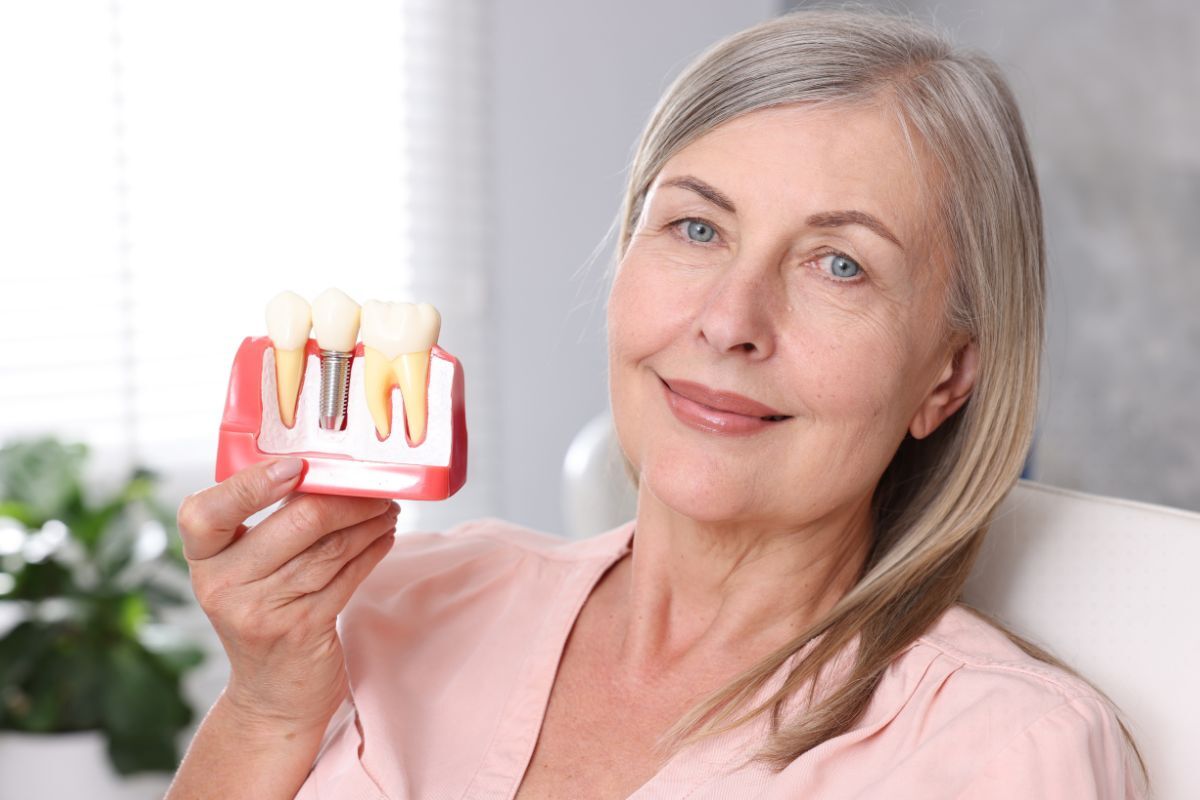
Dental implants use small posts that a dentist places into the jawbone. After the area heals, the posts can support replacement teeth such as crowns, bridges, or implant-supported dentures. Because the posts connect with the jawbone, they provide a stable foundation for the restoration.
Dentures, on the other hand, are removable appliances that replace missing teeth and some of the surrounding gum structure. Depending on your needs, you may receive a complete denture for an entire arch or a partial denture when some natural teeth remain.
Both choices have benefits. However, they differ in stability, maintenance, treatment time, cost, and the way they interact with your jaw.
How Affinity Dental Helps You Compare Your Choices
An experienced dentist at Affinity Dental can help you understand whether implants, dentures, or another restorative option makes sense for your specific situation.
Affinity Dental provides restorative dentistry designed around each patient’s needs. The practice offers both dental implants and dentures as part of its broader approach to replacing missing teeth and restoring function. Dr. Kelly B. Wettstein and Dr. Payton Harker can evaluate your oral health and discuss appropriate treatment options with you.
Instead of choosing based only on appearance or price, your dentist can consider factors such as:
- How many teeth are missing
- The condition of your remaining teeth
- Gum health
- Jawbone volume
- Overall oral health
- Your lifestyle
- Your treatment goals
- Your preferred level of maintenance
- Your budget and treatment timeline
This personalized approach can make the decision easier and more practical.
How Dental Implants Work
Implants replace the tooth root as well as the visible replacement tooth.
The process generally involves several stages. First, your dentist evaluates your mouth and jawbone. If you are a suitable candidate, the implant post goes into the jawbone. The area then needs time to heal and integrate with the surrounding bone.
After healing, your dentist attaches an abutment and a custom restoration.
Key Benefits of Implants
For the right candidate, this approach offers several advantages:
- Strong stability during chewing
- A natural-looking appearance
- No need to remove the restoration every night
- Support for a replacement tooth without relying entirely on neighboring teeth
- A long-term tooth replacement option
- A design that can feel similar to a natural tooth
Affinity Dental explains that implants can replace missing teeth and provide a stable foundation for restorations. The practice also notes that implants can help restore chewing ability and improve the appearance of the smile.
However, implants require a surgical procedure and a healing period. Not everyone qualifies immediately. Your dentist needs to assess your gums, jawbone, and overall oral health first.
How Dentures Work
Dentures take a different approach.
Instead of attaching directly to the jawbone, a denture rests on the gums and replaces missing teeth with a removable appliance. Partial dentures can fill gaps when you still have some natural teeth. Complete dentures can replace all teeth in an upper or lower arch.
Modern dentures can have a natural appearance and can help restore your ability to speak and chew.
Key Benefits of Dentures
Dentures may appeal to patients because they:
- Replace multiple missing teeth at once
- Can provide a faster tooth replacement option in some situations
- Do not require implant surgery
- Can replace an entire arch
- Are removable for cleaning
- Can work for patients who do not qualify for traditional implant treatment
However, dentures require regular care and may feel different from natural teeth. They can also move slightly during eating or speaking, especially if they do not fit properly.
Your dentist can evaluate the fit and make adjustments when necessary.
Stability and Comfort
One of the biggest differences when comparing implants vs dentures is stability.
Implant-supported restorations attach to posts anchored in the jaw. This can give them a strong foundation and reduce movement during normal activities.
Traditional dentures rest on the gums. They can provide good function, but movement may occur depending on the fit, anatomy, and type of denture.
For someone who wants a fixed restoration and has suitable bone and gum health, implants may provide a more stable experience.
For another patient, removable dentures may provide a practical solution that better fits their needs.
There is no universal winner. The best choice depends on your individual circumstances.
Appearance and Natural Feel
Both options can provide an attractive smile when properly designed and fitted.
Implant-supported teeth can closely resemble natural teeth because they emerge from the gum area in a similar way. They also do not need the same type of removable base associated with traditional dentures.
Dentures replace both teeth and some gum tissue. A well-made denture can create a balanced appearance while restoring the shape of your smile.
Your dentist can discuss the expected appearance before treatment and explain what type of restoration would work with your facial features and remaining teeth.
Eating and Speaking
Missing teeth can make certain foods difficult to chew. They can also affect pronunciation.
Both options can improve these functions, but there may be an adjustment period.
With implants, the stability of the restoration can make chewing feel more natural.
With dentures, you may need time to learn how to chew comfortably with the appliance. Some people also notice changes in speech during the adjustment period.
Starting with softer foods and gradually introducing foods with different textures can help you adapt.
Maintenance and Daily Care
Every tooth replacement option requires ongoing care.
Implant-supported teeth still need regular brushing, flossing, and professional dental checkups. The surrounding gums also need attention because healthy tissues help support the restoration.
Dentures require a different routine. You generally remove them for cleaning and follow your dentist’s instructions regarding overnight wear and soaking.
Daily Care for Your Restoration
Regardless of your choice:
- Maintain good oral hygiene.
- Clean your restoration as instructed.
- Attend regular dental appointments.
- Monitor your gums for changes.
- Report discomfort or movement.
- Avoid using abrasive household products on removable appliances.
- Follow your dentist’s recommendations for long-term care.
Proper maintenance can help protect both your restoration and your remaining oral structures.
Treatment Time and Healing
Another important consideration in the implants vs dentures decision involves timing.
Dentures may provide tooth replacement relatively quickly in many cases. However, your dentist may still need to complete extractions, allow tissues to heal, take impressions, and make adjustments.
Implant treatment typically takes longer because the implant needs time to integrate with the jawbone before the final restoration can go into place.
The timeline varies significantly from patient to patient.
Factors that can affect treatment time include:
- Number of missing teeth
- Need for extractions
- Bone condition
- Gum health
- Need for bone grafting
- Type of restoration
- Healing response
Your dentist can provide a more realistic timeline after completing an examination.
Cost and Long-Term Value
Cost often plays a major role in tooth replacement decisions.
Dentures generally have a lower initial cost than implant treatment. However, dentures may need adjustments, relining, repairs, or replacement over time.
Implant treatment typically requires a greater upfront investment because it involves surgery, components, and custom restorations. However, implants can offer long-term value when properly planned, placed, and maintained.
Instead of looking only at the initial price, consider the complete treatment plan and expected maintenance requirements.
Ask your dental team about:
- The total treatment cost
- What the quoted fee includes
- Additional procedures you may need
- Expected maintenance
- Replacement or repair considerations
- Financing or payment options that may apply
A clear discussion can help you make a financially informed decision.
Who May Be a Good Candidate for Implants?
Implants can work well for many adults with missing teeth, but candidacy depends on several factors.
You may need:
- Adequate jawbone support
- Healthy gums or manageable gum disease
- Good overall oral health
- A commitment to proper oral hygiene
- The ability to follow post-treatment instructions
- Enough healing capacity for the procedure
If your jawbone does not have enough volume, your dentist may discuss bone grafting or another treatment before implant placement.
Certain health conditions, medications, and lifestyle factors can also affect treatment planning. Your dentist will review your health history before recommending the procedure.
Who May Benefit From Dentures?
Dentures can be a useful option for people who have lost several or all teeth.
They may be especially appealing when:
- Multiple teeth need replacement
- You want a removable restoration
- You prefer to avoid implant surgery
- You need an option that can replace an entire arch
- Implant treatment does not currently fit your needs
Partial dentures can also provide a way to replace several missing teeth while keeping some natural teeth.
Can You Combine the Two Options?
You do not always have to choose between traditional dentures and individual implant restorations.
Implant-supported dentures combine the concepts.
Instead of relying only on suction or the shape of the gums for stability, the denture connects to strategically placed implants. This can reduce movement and improve stability compared with traditional removable dentures.
Whether this option makes sense depends on your bone health, number of missing teeth, treatment goals, and overall oral health.
Your dentist can explain the different restoration designs available for your situation.
Implants vs Dentures: Which Is Right for You?
There is no single answer for every patient.
Implants may be a good fit if your priority is stability, a fixed restoration, and a long-term replacement approach, and if your oral health supports implant treatment.
Dentures may be a better fit if you want a removable solution, need to replace multiple teeth, or prefer to avoid implant surgery.
Implant-supported dentures may offer another option if you want greater stability while retaining a removable restoration.
Questions to Discuss With Your Dentist
Before deciding, ask:
- Which option fits my oral health?
- Do I have enough bone for implant placement?
- Do I need additional treatment first?
- How long will my treatment take?
- What will daily maintenance involve?
- What should I expect during healing?
- What are the long-term costs?
- Which option best matches my lifestyle?
These questions can help you move from a general comparison to a treatment plan designed specifically for you.
Making the Right Choice for Your Smile
The decision between implants vs dentures should not come down to a simple list of advantages and disadvantages. Your mouth, lifestyle, goals, and overall oral health all matter.
A personalized examination gives your dentist the information needed to make an appropriate recommendation. In some cases, one option clearly makes more sense. In others, you may have several suitable choices.
Affinity Dental provides personalized restorative care for patients who want to replace missing teeth and improve their ability to smile, speak, and chew. Dr. Kelly B. Wettstein and Dr. Payton Harker can evaluate your needs and explain the available options so you can make an informed decision.
Schedule Your Tooth Replacement Consultation
If you are deciding between implants and dentures, schedule an appointment with Affinity Dental in Queen Creek, AZ with Dr. Kelly B. Wettstein or Dr. Payton Harker to discuss your tooth replacement options and determine which approach best fits your smile, oral health, and goals.